A Texas child pornography lawyer defends people charged under Texas Penal Code Section 43.26 for possession or promotion of child pornography, a charge that ranges from a third-degree felony to a first-degree felony depending on the number of images and the defendant's prior record.
The Law Offices of Richard C. McConathy defends state and federal child pornography charges across Texas with over 35 years of criminal defense experience, 6,000+ cases handled, and more than 1,000 dismissals.
Richard McConathy is a member of the Dallas Criminal Defense Lawyers Association, served as Treasurer of the Dallas Bar Association Criminal Law Section, and handles every case personally.
Call 972-233-5700 now or contact us online for a free, confidential consultation available around the clock.
How Do The Law Offices of Richard C. McConathy Defend Texas Child Pornography Charges?

The Law Offices of Richard C. McConathy defends Texas child pornography cases through direct review of digital forensic evidence, search warrant documentation, and the ICAC investigative file before any defense strategy is formed. Richard McConathy holds admission to Texas state district courts and the U.S. District Court for the Northern District of Texas, covering both the state and federal tracks that Texas child pornography cases frequently run on simultaneously.
Over 35 years of criminal defense practice across North Texas, including Dallas County, Tarrant County, Collin County, and Denton County district courts, provides the courtroom familiarity that general practice attorneys do not replicate in this specific charge category. Richard McConathy handles every case personally, reviews the digital forensic report directly, and is available 24/7 for a free consultation.
Free Consultation, Available 24/7
A device seizure or arrest in a Texas child pornography case does not wait for a convenient time. Richard McConathy is available around the clock at 972-233-5700 or through our online contact form for a free, confidential case review with no obligation.
Contact UsHow Texas Classifies Child Pornography Charges Under Section 43.26
Texas classifies child pornography charges under Texas Penal Code Section 43.26 based on the number of items alleged and whether the defendant has a prior conviction under the same statute.
A single item results in a third-degree felony on a first offense, carrying two to ten years in state prison. The charge escalates with item count and prior convictions.
| Scenario | Classification | Penalty Range |
| First offense, less than 10 items | Third-degree felony | 2 to 10 years state prison, up to $10,000 fine |
| First offense, 10 to 49 items | Second-degree felony | 2 to 20 years state prison, up to $10,000 fine |
| First offense, 50 to 99 items | Second-degree felony | 2 to 20 years state prison, up to $10,000 fine |
| First offense, 100 or more items | First-degree felony | 5 to 99 years or life in state prison, up to $10,000 fine |
| Second or subsequent offense, any quantity | Second-degree felony minimum | Enhanced range based on quantity and history |
| Promotion or distribution, first offense | Second-degree felony minimum | Separate and concurrent charges common |
How Texas Counts Items in a Child Pornography Case
Texas counts individual images, videos, and files identified in the forensic examination of seized devices as separate items. Each video counts as one item regardless of length. Duplicate files stored in separate device locations count as separate items.
The item count directly determines the felony tier, which is why the defense reviews the forensic examiner's counting methodology independently before accepting the prosecution's stated quantity.
What the DPS Digital Forensics Lab Does With Your Devices
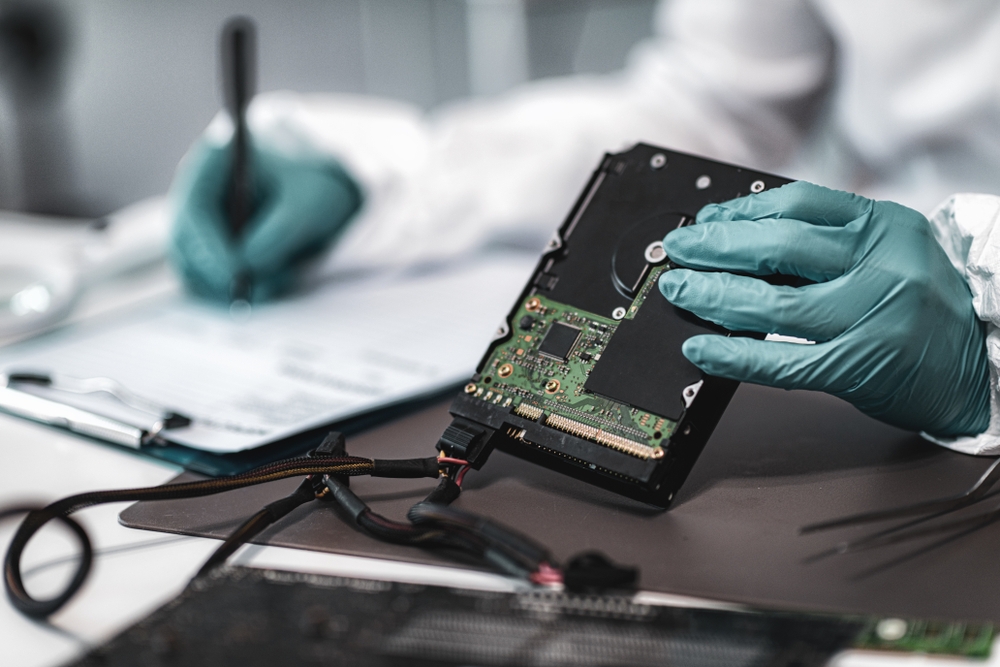
Texas law enforcement agencies submit seized devices to the Texas Department of Public Safety (DPS) Digital Forensics Laboratory or to regional certified forensic labs for examination. The forensic examiner images the device, extracts files, and runs hash value comparisons against known databases of illegal material. The resulting report documents every identified file, its hash value, its creation date, its metadata, and its location on the device.
That report is the backbone of the prosecution's case, and it is subject to challenge on multiple grounds. The following forensic report issues produce defense arguments in Texas child pornography cases:
- Chain of custody gaps: Any break between device seizure, transport to the lab, imaging, and examination affects the integrity of the forensic result
- Hash value database accuracy: The specific database version used for comparisons at the time of examination is subject to defense review for completeness and currency
- Metadata accuracy: File creation dates, download timestamps, and access logs drawn from device metadata require verification against the examiner's extraction methodology
- Deleted file attribution: Files recovered from unallocated space require analysis of whether the defendant placed them there or whether automated processes such as browser caching or malware created them
A forensic examination that looks damaging on its face frequently presents challenge opportunities when defense counsel reviews the underlying methodology rather than accepting the report's conclusions at face value.
What Constitutional Challenges Apply to Texas Child Pornography Searches?
The Fourth Amendment to the U.S. Constitution and Article I, Section 9 of the Texas Constitution both require that search warrants describe with particularity the place to be searched and the items to be seized.
A Texas search warrant authorizing seizure of all digital devices in a residence without device-specific probable cause may exceed that requirement and produce grounds to suppress evidence from devices that lacked an individualized basis for seizure.
Texas law enforcement agents apply for child pornography search warrants from district judges in the county where the search occurs. The affidavit must establish that contraband exists at the specific address at the time of the search.
An affidavit based on IP activity that occurred weeks or months before the warrant application presents staleness arguments because the passage of time weakens the inference that illegal material remains at the location.

What Is a Franks Hearing in a Texas Child Pornography Case?
A Franks hearing is a pretrial proceeding where defense counsel presents evidence that the warrant affidavit contained deliberate misstatements or showed reckless disregard for accuracy. In Texas child pornography cases, Franks hearings most frequently target misstatements about how IP address attribution works, how peer-to-peer network monitoring is conducted, or the reliability of hash value matching technology. When a Franks hearing succeeds, the court suppresses all evidence obtained through the defective warrant.
What Are the Long-Term Consequences of a Texas Child Pornography Conviction?
A Texas child pornography conviction under Texas Penal Code Section 43.26 triggers mandatory sex offender registration under the Texas Sex Offender Registration Program governed by Texas Code of Criminal Procedure Chapter 62.
Registration is required in every county of residence, employment, and schooling, with annual verification requirements that affect housing eligibility, employment options, and daily movement for the duration of the registration period.
The length of the Texas registration obligation depends on the offense classification. Third-degree felony convictions may carry a ten-year registration requirement. Second-degree and first-degree felony convictions carry lifetime registration requirements under Texas law.
A federal conviction in a parallel case carries additional Sex Offender Registration and Notification Act (SORNA) requirements that operate independently from and in addition to any state obligation.
The following consequences attach to a Texas child pornography conviction beyond the criminal sentence:
- Permanent felony record: Texas child pornography convictions are not eligible for expunction, and deferred adjudication is unavailable for this offense category under Texas Code of Criminal Procedure Article 42A.054
- Employment restrictions: Texas licensing boards for healthcare, education, and childcare facilities deny licensure upon conviction, and most employers with access to background check data decline applicants with child pornography convictions
- Housing restrictions: Sex offender registration requirements restrict where a registered person may live, including prohibitions near schools, daycare facilities, and other locations where children are present
- Federal firearms prohibition: A felony conviction triggers a permanent federal firearms ban under 18 U.S.C. Section 922(g)(1), which does not expire upon completion of the sentence
Texas Child Pornography Charges FAQ
I got a letter saying my device is being held for examination. What should I do?
Contact a Texas child pornography defense attorney before speaking with any law enforcement officer or investigator. A device examination hold means the investigation is active and law enforcement is building a case file.
Richard McConathy is available 24/7 at 972-233-5700 to review the notice you received and advise on immediate next steps before any further contact with investigators occurs.
Can a Texas child pornography charge be dismissed if my device was accessed by someone else?
Yes. Shared access or unauthorized device access directly challenges the prosecution's knowing possession element under Texas Penal Code Section 43.26. Forensic analysis of device login records, remote access logs, malware indicators, and user activity timestamps identifies evidence that other parties accessed the device.
Does hiring a lawyer for a Texas child pornography case make things worse?
No. Retaining a defense attorney protects your position regardless of where the investigation stands. Attorney-client privilege attaches from the first conversation, meaning nothing you share is disclosed to law enforcement or prosecutors. An attorney who engages with the investigator or district attorney during the pre-charge window has more ability to influence how the case proceeds than one who enters after an indictment is already filed.
What is the difference between a Texas state child pornography charge and a federal charge?
Texas state child pornography charges are prosecuted under Texas Penal Code Section 43.26 in Texas district courts, with sentences ranging from two years to life depending on the charge level. Federal charges under 18 U.S.C. Section 2252 are prosecuted in U.S. District Courts and carry sentencing guideline calculations that produce longer recommended ranges, particularly for receipt and distribution counts that carry mandatory minimums. Both tracks run simultaneously in many Texas cases, making dual court admission important when selecting defense counsel.
Can deferred adjudication apply to a Texas child pornography charge?
No. Deferred adjudication is not available for Texas Penal Code Section 43.26 charges under Texas Code of Criminal Procedure Article 42A.054, which excludes offenses involving sexual conduct against a child. A defendant charged with child pornography in Texas faces a conviction or acquittal outcome. This exclusion makes the pre-trial defense phase, including suppression motions and evidence challenges, the most productive stage of the case.
Does a Texas child pornography conviction require lifetime sex offender registration?
Second-degree and first-degree felony Texas child pornography convictions require lifetime sex offender registration under Texas Code of Criminal Procedure Chapter 62.
A third-degree felony conviction carries a ten-year registration period under the same chapter. The specific registration duration depends on the exact offense classification, which is confirmed with an attorney before any plea is entered.
What happens to seized devices after a Texas child pornography investigation?
Seized devices are transferred to a forensic laboratory for imaging and examination throughout the case. The original device remains in evidence custody. After case resolution, devices are not automatically returned.
The prosecution follows property return procedures under Texas Code of Criminal Procedure Chapter 47 before any device is returned to its owner, and that process requires a formal request.

Talk to Richard McConathy About Your Texas Child Pornography Case
Richard McConathy is admitted to Texas state district courts and the U.S. District Court for the Northern District of Texas. He has handled over 6,000 criminal cases with more than 1,000 dismissals across North Texas and handles every case personally. There are no handoffs, no case managers, and no surprises about who appears at your hearing.
Call 972-233-5700 or contact us online. The consultation is free and confidential.
