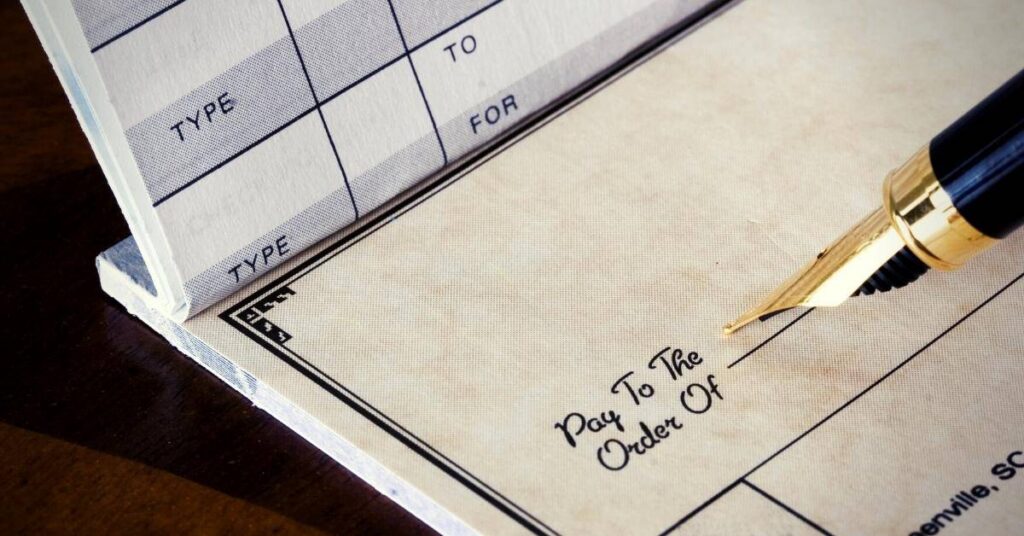
What starts as a simple financial mistake can quickly turn into a criminal accusation.
In Dallas, writing a check with insufficient funds or from a closed account can lead to theft-by-check charges under Texas law. Suddenly, you may be facing fines, restitution demands, and even the possibility of jail time.
But not every bad check case involves criminal intent.
Many situations stem from banking errors, misunderstandings, or financial setbacks—not fraud. The key issue in these cases often comes down to whether prosecutors can actually prove intent to deceive.
At the Law Offices of Richard C. McConathy, we’ve spent decades defending individuals accused of financial and fraud-related offenses throughout Dallas County. Our goal is to identify the facts behind the allegation and challenge charges that do not reflect what truly happened.
If you’ve been accused of issuing a bad check, speaking with an experienced criminal defense lawyer Dallas early can help protect your rights and clarify your options.
Call (972) 528-0116 to schedule a confidential consultation.
What Is a Bad Check Under Texas Law?
In Texas, the issuance of a bad check falls under Texas Penal Code §32.41, which criminalizes issuing or passing a check when the person knows they have insufficient funds to cover it. This isn’t about accidental overdrafts that happen when you miscalculate your balance—prosecutors must prove you knowingly issued the check without adequate funds.
The law distinguishes between innocent banking errors and intentional fraud. According to the Texas State Law Library, several factors determine whether criminal charges apply:
Common scenarios that lead to bad check charges:
- Writing checks with insufficient funds: You write a check knowing your account balance can’t cover the amount
- Checks on closed accounts: Issuing checks after closing the bank account, even if you forgot about outstanding checks
- Stop payment fraud: Placing a stop payment on a check after receiving goods or services with intent to defraud
- Counterfeit or altered checks: Passing checks that have been forged, altered, or fabricated
📋 Key Legal Element: Intent
The critical factor in bad check cases is intent to defraud. Texas law recognizes that people make honest mistakes with their finances. If you genuinely believed you had sufficient funds—perhaps due to pending deposits, banking errors, or mathematical mistakes—you may have a valid defense.
The Notice Requirement
Texas law includes an important protection: before criminal prosecution, the check writer typically must receive written notice that the check was dishonored and be given an opportunity to make the check good within 10 days. Many people don’t realize that responding properly to this notice can prevent criminal charges from being filed.
Theft by Check vs Issuance of a Bad Check
While often used interchangeably, these terms represent different offenses under Texas law with varying levels of severity.
Issuance of a Bad Check
This charge applies when someone writes a check knowing they lack sufficient funds, but without necessarily intending to defraud the recipient. This might occur when:
- Someone mistakenly believes a deposit has cleared
- A person writes a check hoping funds will be available by the time it’s cashed
- Banking errors create temporary insufficient fund situations
Issuance of a bad check is typically charged as a misdemeanor offense, particularly for smaller amounts.
Theft by Check
Theft by check represents a more serious offense because it requires proof that the person intended to defraud the recipient. This charge typically applies when someone:
- Obtains goods, services, or money by intentionally writing a worthless check
- Writes checks on accounts they know are closed
- Uses someone else’s checks without authorization
The penalties for theft by check escalate based on the value of the goods or services obtained.
| Offense Type | Key Difference | Typical Charge Level |
|---|---|---|
| Issuance of Bad Check | May lack intent to defraud; focus on knowingly insufficient funds | Usually misdemeanor |
| Theft by Check | Requires proof of intent to defraud; obtaining something of value | Misdemeanor to felony based on amount |
Important distinction: A Dallas criminal defense lawyer can challenge the prosecution’s evidence regarding intent, which often makes the difference between conviction and dismissal.
Penalties for Issuing a Bad Check in Texas
The consequences for bad check offenses in Texas vary significantly based on the check amount and the defendant’s criminal history. Understanding these penalty ranges helps illustrate why early legal intervention matters.
Class C Misdemeanor
When it applies: Check value is less than $100
Penalties include:
- Fine up to $500
- No jail time
- Criminal record
While this may seem minor, even a Class C misdemeanor creates a permanent criminal record that can affect employment opportunities and professional licensing.
Class B Misdemeanor
When it applies: Check value between $100 and $750
Penalties include:
- Fine up to $2,000
- Up to 180 days in county jail
- Restitution to the victim
- Permanent criminal record
Class A Misdemeanor
When it applies: Check value between $750 and $2,500
Penalties include:
- Fine up to $4,000
- Up to one year in county jail
- Mandatory restitution
- Criminal record affecting future opportunities
State Jail Felony
When it applies: Check value between $2,500 and $30,000
Penalties include:
- 180 days to 2 years in state jail
- Fine up to $10,000
- Felony conviction on permanent record
- Difficulty obtaining employment, housing, and professional licenses
Higher-Level Felonies
Check fraud involving larger amounts escalates to third-degree, second-degree, or even first-degree felonies, with penalties including:
- Multiple years in state prison
- Fines up to $10,000
- Permanent loss of certain civil rights
- Severe impact on future opportunities
💡 Critical timing: According to the Dallas County District Attorney’s Office, many bad check cases can be resolved through civil restitution if addressed before formal charges are filed. This makes early attorney involvement essential.
Common Situations That Lead to Bad Check Charges
Understanding how people end up facing these charges helps demonstrate that many defendants never intended to commit a crime:
Frequent scenarios we encounter:
- Rent payments gone wrong: A tenant writes a rent check believing their paycheck will deposit before the landlord cashes it, but an employer’s direct deposit delay causes the check to bounce
- Business checks bouncing during cash flow problems: Small business owners issue checks during temporary financial difficulties, hoping to make deposits before checks clear
- Checks written after account closure: Someone closes a bank account but forgets about outstanding checks they wrote weeks earlier
- Post-dated check disputes: Writing a post-dated check as a promise to pay in the future, but the recipient cashes it early and it bounces
- Joint account complications: One account holder writes checks without knowing the other account holder has depleted the funds
- Banking errors: Deposits that don’t post when expected, holds placed on accounts, or system errors that temporarily show insufficient funds

Hypothetical Scenario: The Delayed Deposit
Imagine Sarah, a nurse at a Dallas hospital, writes a $400 check for car repairs on Monday, knowing her biweekly direct deposit of $2,200 will hit her account on Wednesday. However, due to a hospital payroll system error, her deposit doesn’t process until Friday. The mechanic deposits her check on Thursday, it bounces, and she receives a criminal notice from the Dallas County District Attorney’s office.
In this scenario, Sarah never intended to defraud anyone. She had a reasonable expectation of sufficient funds. With proper legal representation presenting evidence of the payroll error and her normal banking patterns, charges would likely be dismissed or resolved through restitution without a criminal record.
When Legitimate Mistakes Become Criminal Charges
This is why having a Dallas bad check lawyer review your case early matters—we can often prevent charges from being filed by demonstrating the lack of criminal intent before the case enters the formal court system.
Defenses Against Bad Check Charges
The good news: bad check charges are often defensible. At the Law Offices of Richard C. McConathy, we’ve successfully defended numerous clients by challenging the prosecution’s ability to prove the key elements required for conviction.
Lack of Intent
The most powerful defense: Prosecutors must prove you knowingly issued a check without sufficient funds. If you genuinely believed the funds were available, you cannot be convicted.
Evidence supporting lack of intent:
- Bank statements showing typical account balances
- Pending deposits you expected to clear
- History of covering checks promptly when notified
- Mathematical errors in your check register
- Recent deposits that created reasonable expectation of funds
Banking Errors
Financial institutions make mistakes. When bank errors cause checks to bounce, criminal charges should not follow. Common banking errors include deposits posted to wrong accounts, system glitches that delay processing, unauthorized holds placed without notification, incorrect fee assessments, and processing order errors.
We obtain complete banking records, including internal bank notes and processing timestamps, to demonstrate when institutional errors—not client actions—caused insufficient funds.
Post-Dated Checks
Texas law treats post-dated checks differently than regular checks. When you write a post-dated check, you’re essentially writing a promise to pay in the future. If the recipient cashes the check before the written date and it bounces, this may affect the criminal nature of the charge—particularly if the date was clearly written and both parties agreed to wait.
Identity Theft or Fraud
Sometimes the person accused of writing bad checks wasn’t the one who actually wrote them.
Identity theft involving checks can happen through stolen checkbooks, counterfeit checks created with stolen account information, forged signatures, or checks written by someone with unauthorized access to the account.
We work with banking fraud investigators and present evidence such as handwriting analysis, surveillance footage, timeline evidence showing you were elsewhere, and reports filed with banks and police.
Improper Notice
Texas law provides specific protections: before criminal prosecution can proceed, the check writer must typically receive proper written notice that the check was dishonored. The notice must be sent to the address on the check or driver’s license, clearly state the check was dishonored, specify the amount owed (check amount plus fees), provide at least 10 days to make payment, and include language required by Texas statute.
If proper notice was not provided, the prosecution may not be able to proceed with criminal charges. Many cases are dismissed on this technicality alone.
Insufficient Evidence of Knowledge
The prosecution must prove you knew the account had insufficient funds when you wrote the check. Sometimes the evidence simply doesn’t support this element.
We challenge the knowledge element by showing:
- You hadn’t checked your balance recently (demonstrating you didn’t actually know)
- No prior bounced checks (showing you typically maintained sufficient funds)
- Reasonable belief based on expected deposits
- Banking relationship history showing good faith
How Our Dallas Bad Check Lawyers Can Help
At the Law Offices of Richard C. McConathy, we take a comprehensive approach to defending bad check and check fraud charges. Our strategy focuses on both preventing criminal charges from being filed and aggressively defending cases that enter the court system.
We thoroughly investigate banking records and transaction histories, gather evidence demonstrating your reasonable belief that funds were available, negotiate with prosecutors to arrange restitution before formal charges are filed, structure payment arrangements that satisfy complainants while avoiding criminal prosecution, and aggressively challenge prosecution evidence when cases proceed to trial.
⚖️ Why Early Legal Help Prevents Criminal Charges
Many people don’t realize that most bad check cases can be resolved before criminal charges are filed. When you contact our Dallas bad check attorneys immediately after receiving a dishonored check notice, we can contact the complainant directly to arrange restitution, demonstrate lack of criminal intent to prosecutors, and prevent the case from entering the criminal justice system—protecting your criminal record before charges are filed.
Contact our Dallas bad check attorneys today at (972) 528-0116 to discuss your defense options before charges escalate.
Why Choose Our Dallas Criminal Defense Attorneys
The Law Offices of Richard C. McConathy brings more than 35 years of experience defending clients against financial crime allegations in Dallas County and surrounding areas. Our track record includes over 1,000 cases dismissed or reduced, demonstrating our commitment to protecting clients’ rights and futures.
What sets our firm apart:
Knowledge of Dallas County courts:
We practice regularly in Dallas County Criminal Courts and have established relationships with prosecutors, judges, and court staff. This familiarity with local procedures and personnel often leads to better outcomes for our clients.
Client-focused defense strategies:
We recognize that bad check charges often stem from financial hardship, not criminal intent. Our approach addresses the underlying circumstances while building strong legal defenses.
Proven track record:
Our firm has successfully defended numerous clients facing theft and bad check charges in Dallas County, achieving dismissals, reductions, and favorable outcomes through strategic defense and early intervention.
Comprehensive criminal defense:
As a full-service Dallas criminal defense lawyer firm, we handle all types of theft and fraud charges, from check fraud to robbery charges, ensuring you receive experienced representation regardless of the allegations.
Protecting your future:
We understand that a criminal record can affect employment, professional licensing, housing applications, and educational opportunities. Our goal is not just to defend the current charges, but to protect your long-term future.
🛡️ Serving Multiple North Texas Counties
The Law Offices of Richard C. McConathy serves clients throughout the Dallas-Fort Worth metroplex, including Dallas County, Collin County, Denton County, Tarrant County, and surrounding areas. We bring the same level of dedicated representation to every client, regardless of where charges are filed.
Navigating the Dallas County Court System for Bad Check Charges
Understanding what to expect when facing bad check charges in Dallas County can reduce anxiety and help you prepare effectively. The process involves specific courts, procedures, and locations that are unique to Dallas County.
Where Your Case Will Be Heard
Bad check charges in Dallas County are typically processed through one of several courthouses depending on the charge level and location:
For Misdemeanor Bad Check Charges:
George Allen Courts Building 600 Commerce Street Dallas, TX 75202
This is the primary location for misdemeanor criminal cases in Dallas County, conveniently located in downtown Dallas near the West End Historic District. The building houses the Dallas County Criminal Courts at Law, which handle most Class A, B, and C misdemeanor theft by check and bad check cases.
The courthouse is accessible via DART Rail (EBJ Union Station or West End Station on multiple lines including Green, Orange, Blue, and Red Lines) and offers nearby public parking at the Records Building Parking Garage and several private lots along Commerce Street and Houston Street.
For Felony Bad Check Charges:
Frank Crowley Courts Building 133 N. Riverfront Boulevard Dallas, TX 75207
Felony theft by check cases (amounts over $2,500) are heard in the Criminal District Courts located at the Frank Crowley Courts Building. This facility is located west of downtown Dallas, near the Trinity River and easily accessible from Interstate 35E.
Parking is available in the adjacent multi-level parking garage, and DART Bus Route 524 serves the courthouse area.
The Arraignment Process in Dallas County
Your first court appearance for a bad check charge will typically be an arraignment, where you’ll be formally notified of the charges and asked to enter a plea.
What happens at arraignment:
- Charge reading: The judge or magistrate reads the formal charges against you
- Rights advisement: You’re informed of your constitutional rights, including the right to an attorney
- Plea entry: You’ll be asked to plead guilty, not guilty, or no contest
- Bail consideration: If you were arrested, the judge will set or review bail conditions
- Next court date: The judge will schedule your next appearance, typically a pre-trial conference
Important timing: Dallas County typically schedules arraignments within 48 hours of arrest for detained defendants. If you received a citation or summons, your arraignment date will be listed on the paperwork.
Court appearance tips for Dallas County courts:
- Arrive at least 30 minutes early to go through security screening
- Dress conservatively and professionally
- Bring a photo ID (required to enter the courthouse)
- Turn off your cell phone before entering the courtroom
- Address the judge as “Your Honor”
Understanding Bail and Bonds in Dallas County
If you’re arrested for a bad check offense in Dallas County, understanding the bail process is essential.
Dallas County Jail Processing:
Arrested individuals are taken to the Lew Sterrett Justice Center: 111 West Commerce Street Dallas, TX 75202
This is Dallas County’s main jail facility, located in downtown Dallas. The complex includes multiple detention facilities (North Tower, West Tower, and South Tower). Processing time typically ranges from 4 to 12 hours, depending on how busy the facility is.
Bail amounts for bad check offenses:
Dallas County judges typically set bail based on the offense level and the defendant’s criminal history:
- Class C Misdemeanor: Often released on citation or personal recognizance bond
- Class B Misdemeanor: Bail typically ranges from $500 to $2,000
- Class A Misdemeanor: Bail typically ranges from $1,500 to $5,000
- State Jail Felony: Bail typically ranges from $5,000 to $15,000
Types of bonds available in Dallas County:
Personal Recognizance (PR) Bond: You’re released on your promise to appear without posting money. This is common for first-time, low-level offenses.
Cash Bond: You or someone on your behalf pays the full bail amount in cash to Dallas County. The money is returned after case completion, minus court costs.
Surety Bond: A bail bondsman posts bail on your behalf for a non-refundable fee (typically 10% of the bail amount). Dallas has numerous bail bond companies located near the jail on Riverfront Boulevard.
Dallas County Bad Check Program
Dallas County offers a Check Division through the District Attorney’s Office that can help you avoid criminal prosecution if you act quickly after receiving notice.
District Attorney Check Division: Frank Crowley Courts Building 133 N. Riverfront Boulevard, LB 19, 11th Floor Dallas, TX 75207 Phone: (214) 653-3743
How the program works:
- You receive a notice from the DA’s Check Division about the dishonored check
- The notice typically provides 10 days to contact the office and make arrangements
- If you pay restitution plus applicable fees within the specified timeframe, criminal charges may be avoided
- The case can be resolved without entering the criminal court system
- You avoid a criminal record while satisfying the merchant’s claim
This program is exactly why early legal representation matters—our attorneys can help you navigate this program to avoid criminal prosecution entirely.
🏛️ Local Context: Why Dallas County Court Experience Matters
Our firm’s deep familiarity with Dallas County courts provides significant advantages:
We know the prosecutors: After practicing in Dallas County for over 20 years, we have established working relationships with Assistant District Attorneys in the Hot Check Division and the Economic Crimes Unit. These relationships often facilitate better plea negotiations and alternative resolutions.
We know the judges: Understanding each judge’s tendencies, preferences, and typical rulings allows us to tailor our defense strategies accordingly. We know which judges are more receptive to certain arguments and which prosecutors are more willing to negotiate.
We know the procedures: Dallas County has specific local rules and procedures that differ from other Texas counties. We know where to file motions, how to request hearings, and how to navigate the Dallas County e-filing system efficiently.
We know the geography: Our office is conveniently located to serve clients appearing at both the George Allen Courts Building and the Frank Crowley Courts Building, making it easy to meet before court appearances or handle last-minute issues.
What To Do If You Are Accused of Writing a Bad Check
The steps you take immediately after being accused of issuing a bad check can significantly impact the outcome of your case. Follow these guidelines to protect your rights:
1. Do not ignore the notice or charges
Many people make the mistake of ignoring dishonored check notices, hoping the problem will go away. It won’t. Ignoring legal notices typically results in criminal charges being filed, arrest warrants being issued, loss of opportunity to resolve the matter civilly, and additional fees and penalties. Take every notice seriously, even if you believe the charges are unfounded.
2. Do not contact the complainant directly without legal advice
While your instinct may be to call the person or business that received the bad check, this can create legal problems. Anything you say can be used as evidence against you, you might inadvertently admit to elements of the crime, and the conversation could be recorded. Let your attorney handle communications with complainants, which protects your legal rights while still addressing their concerns.
3. Preserve all bank records and documentation
Gather and protect evidence that may support your defense: complete bank statements for the relevant period, deposit receipts and records, account agreements, any correspondence with the bank about errors or holds, pay stubs showing expected deposits, calendar or planner showing when you believed deposits would clear, and previous bank statements showing typical account management. Do not alter or destroy any documents, even if they appear unhelpful to your case.
4. Speak with a defense attorney immediately
The sooner you contact a Dallas bad check lawyer, the more options you have. Early intervention can prevent criminal charges from being filed, attorneys can negotiate restitution agreements that avoid prosecution, legal counsel protects you from making statements that hurt your case, and experienced attorneys can identify defenses you might not recognize. Waiting to hire an attorney typically makes cases more difficult and expensive to resolve.
Understanding Dallas County Court Paperwork
When facing bad check charges in Dallas County, you’ll encounter several forms and documents. Understanding these can help you stay organized:
Common documents you may receive:
- Citation or Summons: Your official notice to appear in court, including case number, court location, and date/time
- Complaint/Information: The formal charging document that details the specific allegations
- Notice of Dishonored Check: The 10-day notice required before criminal prosecution, typically sent by certified mail
- Conditions of Bond form: If released on bail, this document lists requirements you must follow (court appearances, no new arrests, etc.)
- Financial Disclosure Form: Used to determine if you qualify for a court-appointed attorney
- Waiver of Arraignment: Your attorney may file this to waive the formal arraignment if we’ve already discussed the charges
Where to access your Dallas County court records:
Dallas County provides online access to criminal case information through the Dallas County Clerk’s website. You can search by name or case number to check:
- Court dates and times
- Case status
- Bond conditions
- Upcoming hearings
5. Avoid making statements to investigators or police
If police or investigators contact you about bad check allegations, politely decline to answer questions, state that you wish to speak with your attorney, and do not try to explain your side of the story. Remember that investigators are gathering evidence for prosecution, and anything you say will be documented and can be used against you, even if you’re just trying to explain a misunderstanding.
Hypothetical Scenario: The Wrong Response
Imagine John receives a letter from the Dallas County District Attorney stating that he wrote a $650 bad check to a local retailer. Panicked and wanting to explain, John calls the store manager and says, “I’m so sorry, I knew I was short on money but I really needed those tools for work. I planned to deposit my paycheck before you cashed it, but it didn’t work out.”
John has just admitted to the key elements of the crime: knowledge of insufficient funds and intent. Even if he had a valid defense—such as a banking error or a reasonable expectation of funds—his statement has seriously damaged his case. With legal representation before making contact, this damaging admission could have been avoided.
Practical Considerations for Court Appearances in Dallas County
If you have a court date at the George Allen Courts Building:
Parking options:
- Records Building Parking Garage (500 Elm Street) – closest option, typically $10-15 for the day
- Reunion Tower Parking (300 Reunion Boulevard) – short walk, often less crowded
- Street parking meters along Commerce Street (limited to 2 hours)
Nearby resources:
- Starbucks at 508 Main Street (restrooms and place to meet your attorney before court)
- Dallas County Law Library (500 Main Street, 2nd Floor) – free legal research resources
- Multiple restaurants and cafes in the West End Historic District for breaks between hearings
If you have a court date at the Frank Crowley Courts Building:
Parking:
- Courthouse parking garage (entrance on Riverfront Boulevard) – most convenient, typically $10-15
- Free street parking available on side streets west of the courthouse (Vilbig Road area), about a 10-minute walk
Security screening: Expect to go through metal detectors at both courthouses. Do not bring:
- Weapons of any kind
- Large bags or backpacks (small purses are allowed)
- Food or drinks
- Cameras or recording devices
Accessibility: Both Dallas County courthouses are ADA compliant with elevators and wheelchair-accessible courtrooms. If you need accommodations, inform the court clerk or your attorney in advance.
Contact a Dallas Bad Check Lawyer Today
A bounced or disputed check shouldn’t automatically turn into a criminal case.
But prosecutors sometimes push these charges forward before the full story is even clear. A misunderstanding, banking issue, or simple mistake can suddenly turn into theft-by-check allegations and a criminal record.
That’s where we step in.
At The Law Offices of Richard C. McConathy, we’ve spent more than two decades standing up for people across Dallas County when financial accusations start moving toward criminal charges. When the state tries to turn a financial dispute into a prosecution, we push back.
If you’re dealing with a bad check accusation in Dallas, don’t let it escalate without a defense lawyer involved.
📞 Call (972) 528-0116 to speak with our office now.
Our team will review what happened, explain your options, and start working to keep this situation from turning into something much bigger.
Frequently Asked Questions
Is writing a bad check a crime in Texas?
Yes, writing a bad check can be a crime in Texas if you knowingly issue a check with insufficient funds. Under Texas Penal Code §32.41, issuing or passing a check when you know there are insufficient funds constitutes a criminal offense. However, the key element is knowledge and intent—accidentally overdrawing your account or making an honest banking mistake is different from intentionally defrauding someone. The distinction between a civil debt dispute and criminal conduct depends on whether prosecutors can prove you knew the funds were insufficient when you wrote the check and intended to defraud the recipient.
How much money makes a bad check a felony in Texas?
Bad check charges become a state jail felony when the check value is $2,500 or more but less than $30,000. The specific thresholds are: under $100 (Class C misdemeanor), $100 to $750 (Class B misdemeanor), $750 to $2,500 (Class A misdemeanor), $2,500 to $30,000 (state jail felony), $30,000 to $150,000 (third-degree felony), $150,000 to $300,000 (second-degree felony), and $300,000 or more (first-degree felony). Felony convictions carry significantly more severe penalties, including state prison sentences, substantial fines, and lifelong consequences affecting employment, housing, and civil rights.
Can bad check charges be dismissed?
Yes, bad check charges can often be dismissed when restitution is made before prosecution, intent cannot be proven, improper notice was provided, banking errors caused insufficient funds, or there’s insufficient proof that you knew the account lacked funds. Our firm has successfully achieved dismissals in numerous theft and bad check cases by demonstrating lack of intent, arranging early restitution, or proving improper procedures. Early attorney involvement significantly increases the chances of dismissal.
What should I do if I receive a bad check notice?
If you receive a dishonored check notice or criminal complaint: do not ignore it, do not contact the complainant directly, preserve all bank records and documentation, contact a Dallas bad check lawyer immediately, and do not make statements to police or investigators. The notice typically provides 10 days to make payment before criminal charges proceed. During this window, an experienced attorney can often negotiate a resolution that avoids prosecution entirely. Contact our office at (972) 528-0478 as soon as you receive any notice regarding a bad check to protect your rights and explore your options.