Aggravated domestic assault in Texas is a felony carrying prison time, protective orders, and permanent firearm restrictions. These charges involve serious bodily injury, use of a deadly weapon, or strangulation.
The criminal defense attorneys at the Law Offices of Richard C. McConathy have protected clients charged with felonies and domestic violence offenses in Dallas, Carrollton, Irving, and Richardson since 2002.
Contact our Criminal Defense Lawyer Dallas now.
Don't Wait to Speak With a Dallas Aggravated Domestic Assault Lawyer
The hours after arrest are critical. Prosecutors begin building their case immediately—interviewing the alleged victim, collecting medical records, photographing injuries, and securing witness statements.
Early intervention changes outcomes. We can document your injuries before they heal, preserve evidence, interview witnesses, and challenge illegal searches before prosecutors make charging decisions.
The Dallas County DA's Office has dedicated family violence prosecutors who rarely offer favorable plea deals and push for maximum penalties.
Call (972) 597-2037 now.
What Happens After Your Arrest
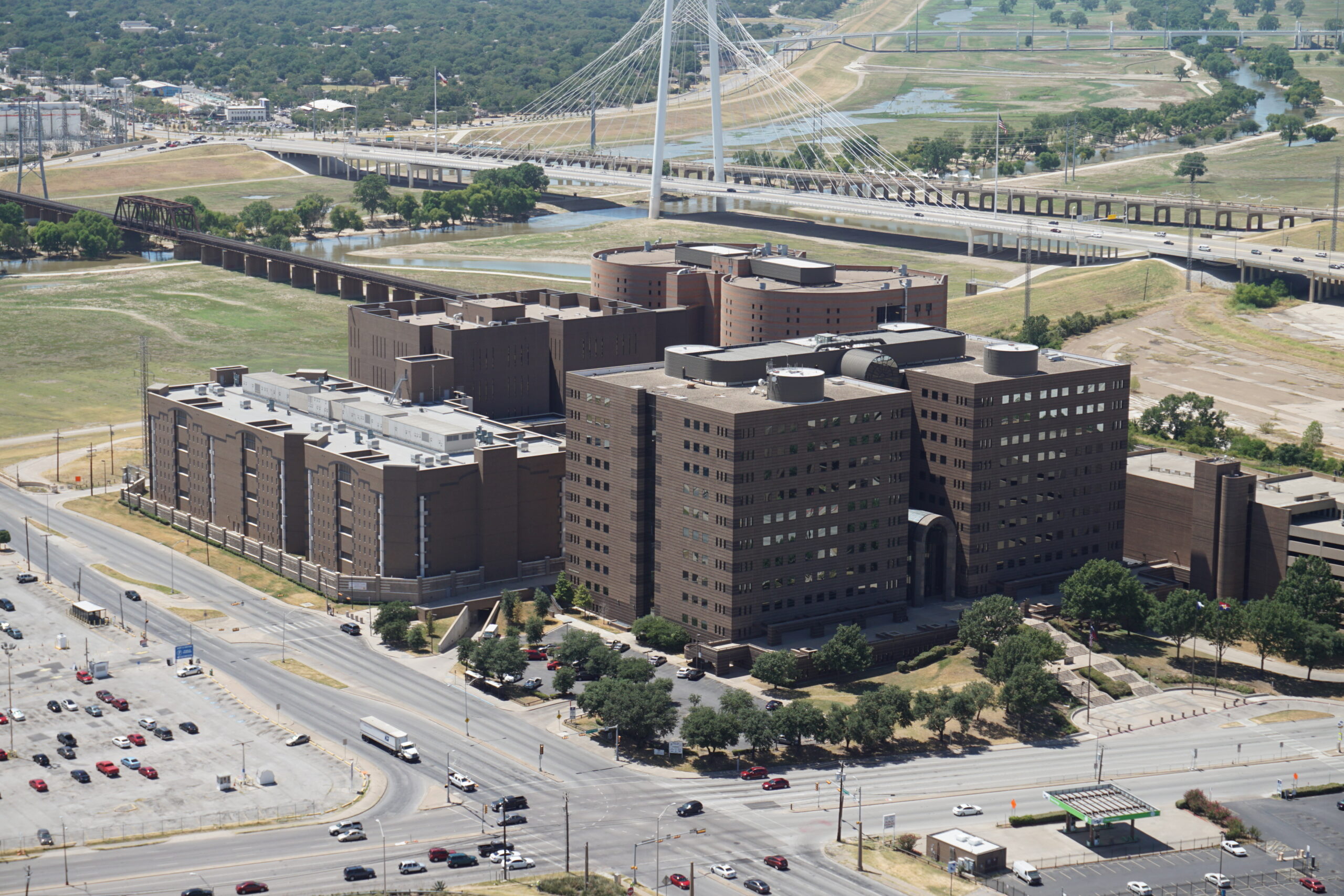
Booking at Lew Sterrett Justice Center (111 West Commerce Street, Dallas, TX 75202): The seventh-largest jail in the United States processes all Dallas County arrests. Fingerprinting, photographing, and data entry typically takes 3-6 hours.
Magistration Within 48 Hours: The magistrate informs you of charges, explains your rights, and sets bond. For aggravated domestic assault, bond ranges from $25,000 to $100,000 depending on weapon use, injury severity, criminal history, flight risk, and danger to the victim.
Bond Options: Cash bond (full amount, refundable), surety bond (10-15% to bondsman, non-refundable), or attorney bond.
Emergency Protective Orders: Courts issue orders prohibiting victim contact for 31-61 days.
Arraignment at Frank Crowley Courts Building (133 N. Riverfront Boulevard, Dallas, TX 75207): Your case is assigned to one of seven Criminal District Courts (6th floor). The judge reads charges, you enter a plea, and the court sets hearing dates. Hours: Monday-Friday, 8:00 a.m. - 4:30 p.m.
What to Do After Arrest
- Remain calm. Resisting arrest strengthens the prosecution's case.
- Stay silent. Decline to answer questions. Request an attorney immediately.
- Avoid victim contact. Violating protective orders results in additional charges—even if the victim contacts you first.
- Preserve evidence. Document the incident, photograph injuries, save messages and emails.
- No social media. Prosecutors review all platforms.
How We Help
We've handled over 6,000 criminal cases since 2002.
We challenge illegal searches, scrutinize arrest procedures, interview witnesses, review body camera footage, analyze medical records, and examine forensic evidence. We look for inconsistencies, evidence of self-defense, and proof of exaggerated or fabricated allegations.
We prepare every case for trial and negotiate from strength. When prosecutors see we're ready to fight, they often reduce or dismiss charges.
What Is Aggravated Domestic Assault in Texas?
Under Texas Penal Code § 22.02, assault is aggravated when the defendant:
- Causes serious bodily injury, or
- Uses or exhibits a deadly weapon
When the victim is a family member, household member, or dating partner, prosecutors add a family violence enhancement triggering harsher penalties.
Serious bodily injury means injury creating substantial risk of death, causing death, serious permanent disfigurement, or protracted loss of bodily function. Examples: broken bones requiring surgery, loss of consciousness, burns requiring skin grafts, extended hospitalization, knife/gunshot wounds, head trauma.
Aggravated Assault With a Deadly Weapon
Texas law broadly defines deadly weapon as anything capable of causing death or serious bodily injury in the manner of its use. This includes firearms, knives, baseball bats, motor vehicles, and heavy household items.
The key is how the object was used. A lamp on a table is not a deadly weapon. That same lamp swung at someone's head becomes one under Texas law.
If you're facing charges involving a deadly weapon, contact our assault with a deadly weapon defense attorneys immediately.
Assault by Strangulation or Suffocation
Texas Penal Code § 22.01(b)(2)(B) addresses assault by impeding normal breathing or blood circulation by applying pressure to the throat/neck or blocking the nose/mouth.
Strangulation cases are high-priority felonies because victims who have been strangled are eight times more likely to become homicide victims. Prosecutors aggressively pursue these cases using medical evidence (petechial hemorrhaging), photographs of neck marks, victim testimony, and emergency room records.
Many strangulation allegations are exaggerated or fabricated. Visible marks can result from scratching, allergic reactions, or unrelated conditions.
Learn more about defending assault by strangulation charges.
Serious Bodily Injury Cases
Injuries meeting the serious bodily injury standard include: multiple fractured ribs, skull fractures, traumatic brain injuries, broken facial bones requiring reconstructive surgery, internal organ damage, severe lacerations, significant burns, and injuries requiring multi-day hospitalization.
If the prosecution cannot prove serious bodily injury, they cannot sustain an aggravated assault conviction.
Penalties for Aggravated Domestic Assault
Second-Degree Felony: 2-20 years prison, up to $10,000 fine. Probation rare.
First-Degree Felony: 5-99 years or life. Applies with prior family violence convictions, serious permanent disfigurement, or firearm use.
Additional Consequences: Protective orders (2+ years), permanent firearm ban, professional license loss, housing restrictions, deportation for non-citizens, loss of child custody.
Defense Strategies
Lack of Sufficient Evidence
Prosecution must prove every element beyond reasonable doubt. We challenge weak or inconsistent testimony, insufficient proof of injury severity, and missing physical evidence.
Self-Defense
Under Texas Penal Code § 9.31, you're justified in using force when you reasonably believe it's immediately necessary to protect yourself against unlawful force.
We establish self-defense by showing: you reasonably believed force was necessary, the victim used unlawful force first, and your force was proportional.
Successful self-defense cases involve: victim's history of violence, client's defensive wounds, witness testimony, threatening messages from the victim.
False Allegations
Alleged victims fabricate claims for custody disputes, divorce leverage, revenge, or immigration benefits. We investigate thoroughly: reviewing family court records, obtaining mental health records when permissible, interviewing witnesses, analyzing timelines.
Constitutional Violations
We file motions to suppress evidence from illegal searches, improper arrests, denial of counsel, or coerced confessions.
Why Choose Us
We've defended clients facing aggravated assault and domestic violence charges since 2002.
Local Experience: We know the Frank Crowley Courts Building inside out—Criminal District Courts 1-7 (6th floor, felonies) and County Criminal Courts 1-10 (3rd/4th floors, misdemeanors). We know which judges grant bond reductions and which prosecutors negotiate.
Trial-Ready: We try cases to verdict regularly. Prosecutors know we're prepared to fight.
Criminal Defense Only: We don't practice family law, personal injury, or immigration. Criminal defense is all we do.
Our Track Record
Real outcomes from cases we've handled (all case numbers are public records):
- Aggravated Assault w/ Deadly Weapon, Dismissed (Dallas County, F1300346)
- Assault by Contact Family Violence, Dismissed (City of Dallas, C21550262)
- Assault Family Violence, Dismissed (Dallas County, M13-33519)
- Assault Family Violence, Dismissed (Dallas County, M14-23336)
- Assault Family Violence, Dismissed (Dallas County, M16-10155)
- Assault- Bodily Injury, Reduced to Disorderly Conduct (Tarrant County, 1361743)
- Assault- Threats Family Violence, Dismissed (Dallas County, C21363176 01)
Related Charges We Handle
- Domestic assault
- Assault charges
- Continuous Violence Against the Family
- Protective Order Violations
Our criminal defense attorneys handle all assault-related offenses.
Long-Term Consequences of Conviction
Felony convictions cannot be sealed or expunged. You face: permanent criminal record, lifetime firearm ban, professional license loss, housing denial, deportation (non-citizens), loss of child custody.
Comparison: Misdemeanor vs. Aggravated Assault
| Factor | Misdemeanor | Aggravated |
|---|---|---|
| Classification | Class A Misdemeanor | 2nd Degree Felony (or 1st Degree with enhancements) |
| Prison Sentence | Up to 1 year in county jail | 2 to 20 years (2nd Degree) or 5 to 99 years (1st Degree) |
| Fine | Up to $4,000 | Up to $10,000 |
| Injury Requirement | Bodily injury (pain, illness, impairment) | Serious bodily injury OR use of deadly weapon |
| Examples | Scratches, bruises, minor cuts | Broken bones, head trauma, knife/gun use |
| Probation Eligibility | Yes, commonly granted | Rarely granted in Dallas County |
| Record Sealing | Possible after waiting period | Generally not eligible |
| Firearm Ban | Yes, under federal law | Yes, permanent federal prohibition |
Dallas County Prosecution Approach
Family Violence Unit: Specialized prosecutors handle only domestic assault cases. They use risk assessment tools, pursue high-risk cases (strangulation, weapons, threats) aggressively, and employ victim advocates.
No-Drop Policies: Prosecutors pursue cases even when victims refuse to cooperate, using 911 calls, medical records, and prior statements.
Dallas County Criminal District Courts
Your aggravated domestic assault case will be assigned to one of seven Criminal District Courts at the Frank Crowley Courts Building. Each court has different judges, procedures, and sentencing tendencies:
| Court | Floor Location | Judge Assignment Changes | Typical Caseload |
|---|---|---|---|
| Criminal District Court 1 | 6th Floor | Judges rotate periodically | Felony assault, robbery, drug offenses |
| Criminal District Court 2 | 6th Floor | Judges rotate periodically | Felony assault, family violence |
| Criminal District Court 3 | 6th Floor | Judges rotate periodically | Mixed felony docket |
| Criminal District Court 4 | 6th Floor | Judges rotate periodically | Felony violent crimes |
| Criminal District Court 5 | 6th Floor | Judges rotate periodically | Mixed felony docket |
| Criminal District Court 6 | 6th Floor | Judges rotate periodically | Felony assault cases |
| Criminal District Court 7 | 6th Floor | Judges rotate periodically | Mixed felony docket |
Contact Us
Contact our Criminal Defense Lawyer Dallas now.
Office Location: Law Offices of Richard C. McConathy
Irving, TX
Courthouse Distances:
- Frank Crowley Courts (133 N. Riverfront Blvd): 15 min via I-30
- Lew Sterrett Justice Center (111 W. Commerce St): 15 min via I-30
Contact us online or meet us at Lew Sterrett to discuss bond options.
Dallas Aggravated Domestic Assaults FAQ
Is aggravated domestic assault a felony in Texas?
Yes. Always a felony. Second-degree (2-20 years) or first-degree (5-99 years) depending on circumstances.
Can domestic assault charges be dropped in Texas?
Only prosecutors can dismiss charges—not victims. However, attorneys can present evidence to prosecutors showing why cases should be dismissed.
What is considered a deadly weapon in Texas?
Anything capable of causing death or serious injury in the manner used: guns, knives, cars, bottles, tools, furniture.
Will I go to jail for aggravated domestic assault?
Prison is possible for convictions. Second-degree: 2-20 years. First-degree: 5-99 years. Many cases are dismissed or reduced through defense work.
Can I contact the alleged victim while charges are pending?
No. Courts issue protective orders prohibiting all contact. Violations result in additional charges—even if the victim contacts you first.