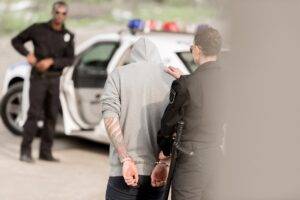
If you’ve been accused of fleeing or attempting to elude police in Dallas, prosecutors will try to argue that you intentionally ignored a lawful stop.
But that’s not always what actually happened.
Drivers are often confused, frightened, or simply looking for a safe place to pull over. What police describe as “evading arrest” does not always meet the legal definition of fleeing or eluding under Texas law.
That’s where the details matter.
We examine everything—the officer’s signals, the location of the stop, the vehicle markings, and whether the state can actually prove you intentionally tried to evade police.
Call (972) 528-0116 for a confidential case review.
What is fleeing or attempting to elude in Texas?
Texas Transportation Code § 545.421 makes it illegal to willfully fail or refuse to stop your vehicle, or flee or attempt to elude a pursuing police vehicle after receiving a visual or audible signal to stop. The officer must be in uniform with a prominently displayed badge, and the vehicle must bear law enforcement insignia that is reasonably visible.
Not every delayed stop is criminal. The law requires willful conduct. If you were looking for a safe, well-lit place to pull over, didn’t realize police were behind you, or misunderstood the signal, the state may not be able to prove the charge.
Elements the prosecutor must prove
To convict you under § 545.421, the prosecution must establish beyond a reasonable doubt that:
- You were operating a motor vehicle
- A visual or audible signal was given to stop
- The signal came from a properly identified officer in a properly marked police vehicle
- You willfully failed to stop or attempted to elude the officer
Does fleeing and eluding always mean a high-speed chase?
No. Many cases involve hesitation, brief delays, or pulling into a parking lot rather than stopping on a dark roadway. Prosecutors file these charges in situations where the person may have had perfectly reasonable explanations for their actions.
Fleeing and eluding vs. evading arrest in Texas
People often use these terms interchangeably, but they describe two separate criminal offenses under Texas law:
Fleeing or attempting to elude is governed by Texas Transportation Code § 545.421. This charge applies specifically to motor vehicle operation and failure to stop after a signal from police.
Evading arrest or detention is covered under Texas Penal Code § 38.04. This broader charge applies when someone intentionally flees from a person they know is a peace officer or federal special investigator attempting to lawfully arrest or detain them. The flight doesn’t have to involve a vehicle.
Why the difference matters
The distinction affects your defense strategy. These are different statutes with different elements, different potential enhancements, and different ways prosecutors approach plea negotiations. An officer’s description of what happened may not match the legal charge filed against you.
You should have counsel review the actual complaint rather than relying on what the arresting officer told you at the scene. The official charging document determines which statute applies and what the state must prove.
Penalties for fleeing and eluding in Texas
| Classification | Maximum Jail Time | Maximum Fine | When It Applies |
|---|---|---|---|
| Class B misdemeanor | Up to 180 days | Up to $2,000 | Standard fleeing and eluding cases |
| Class A misdemeanor | Up to 1 year | Up to $4,000 | If reckless conduct places another in imminent danger of serious bodily injury |
These penalties come from the Texas Penal Code’s punishment ranges for misdemeanors. While jail time is possible, many first-time defendants face probation, fines, community service, and other conditions if convicted.
Collateral consequences of a conviction
A fleeing and eluding conviction creates a permanent criminal record that can affect:
- Employment opportunities: Many employers conduct background checks and may view any charge involving police as a red flag
- Professional licenses: Teachers, healthcare workers, CDL holders, and others may face disciplinary action
- Insurance rates: Your auto insurance company may raise premiums or drop coverage
- Immigration status: Non-citizens can face deportation or inadmissibility issues based on certain convictions
- Future criminal cases: A prior conviction can affect bond amounts and sentencing if you’re charged with another offense
Additionally, if prosecutors charged you with multiple offenses—such as DWI, drug possession, kidnapping or deadly conduct—you may face compounding penalties.
Common defense strategies in Dallas fleeing and eluding cases
We examine every element of the state’s case to identify weaknesses and build your defense. Strategies we use include:
Lack of willful intent
The statute requires willful conduct. This means the prosecution must prove you purposely refused to stop, not that you made a mistake or acted out of confusion. If you:
- Did not realize police were signaling you to stop
- Were trying to reach a safer, well-lit place to pull over
- Experienced traffic or road conditions that affected your ability to stop immediately
- Believed the unmarked vehicle following you was not law enforcement
Then the state may not be able to prove the willful element beyond a reasonable doubt.
Officer or vehicle did not meet statutory requirements
Texas law has specific requirements for the officer and vehicle. We investigate whether:
- The officer was in uniform with a prominently displayed badge
- The vehicle bore law enforcement insignia reasonably visible or discernible
- The signal given was clear and would have been understood by a reasonable person
If police used an unmarked vehicle without proper identification, or if the officer was not properly uniformed, the stop may not meet the legal standard for a § 545.421 charge.
Mistaken interpretation of delay
Police officers sometimes interpret brief hesitation as intentional flight. If you slowed down, activated your turn signal, or pulled forward to find a shoulder, dashcam and bodycam footage can prove you intended to stop safely, not flee.
Challenging the state’s evidence
Physical evidence can undermine the officer’s version of events. We examine:
- Video footage from the officer’s vehicle or body camera
- Timing and distances recorded in dispatch logs
- Radio communications between officers
- Witness testimony
- Inconsistencies between the officer’s report and other evidence
What to expect after a fleeing and eluding arrest in Dallas County
If you were arrested for fleeing and eluding in Dallas, understanding the process can help you protect your rights.
Booking at Lew Sterrett Justice Center
Most Dallas County arrests are processed at the Lew Sterrett Justice Center (111 West Commerce Street, Dallas, TX 75202). The booking process includes fingerprinting, photographing, and intake. This typically takes several hours.
Bond setting
A magistrate will review your charges and set bond, usually within 48 hours of arrest. For a Class B misdemeanor fleeing and eluding charge, bond amounts in Dallas County typically range from $500 to $2,000, depending on your criminal history and the specific facts.
For a Class A misdemeanor (if reckless conduct placed someone in danger), bond may be set higher, often between $1,500 and $5,000.
Bond can be posted at the Lew Sterrett Justice Center 24 hours a day, 7 days a week. Dallas County accepts cash bonds, cashier’s checks, or money orders. You may also qualify for Dallas County Pretrial Release, which provides low-cost county bonds for Class A and B misdemeanors—typically $20 or 3% of the bond amount, whichever is greater.
Arraignment
Your first court appearance (arraignment) will take place at the Frank Crowley Courts Building (133 N. Riverfront Boulevard, Dallas, TX 75207), usually 2 to 6 weeks after charges are filed.
At arraignment, you will:
- Be formally advised of the charges against you
- Hear the range of punishment you face
- Enter a plea (not guilty, guilty, or no contest)
- Receive your next court date
This is also when your attorney can argue for bond reduction if it was set too high.
What to do if you were charged with fleeing and eluding in Dallas
If you’ve been arrested or charged, take these steps to protect your rights:
- Do not discuss the facts with police after invoking your right to counsel
- Preserve any dashcam or phone data that may have recorded the incident
- Write down where the stop began and ended and the route you took
- Save names and contact information of witnesses who were in your vehicle or nearby
- Contact a Dallas criminal defense lawyer immediately to begin building your defense
Call (972) 528-0116 to speak with our team about your fleeing and eluding charge.
How our Dallas criminal defense lawyers can help
We build your defense by:
- Reviewing bodycam, dashcam, and dispatch evidence: We obtain all video and audio recordings to verify the officer’s claims and identify inconsistencies
- Analyzing whether § 545.421 actually fits the facts: Sometimes prosecutors file fleeing and eluding charges when the conduct is better described as evading arrest, reckless driving, or another offense
- Negotiating for reduction or dismissal where possible: If the evidence is weak, we work with prosecutors to get charges reduced to a lesser offense or dismissed entirely
- Preparing for trial when needed: If a fair plea offer is not available, we take your case to trial and hold the state to its burden of proof
- Protecting you from avoidable admissions early in the case: Many people hurt their defense by making statements to police without understanding the legal implications
We’ve successfully defended clients facing misdemeanor and felony charges across Dallas County and surrounding areas. Our Texas criminal defense team understands local courts, prosecutors, and the specific defenses that work in North Texas.
Fleeing and eluding cases in Dallas County are heard in the County Criminal Courts at Law, located on the third floor of the Frank Crowley Courts Building. Dallas County has 10 criminal courts at law that handle Class A and B misdemeanor cases. We regularly appear in these courts and know the judges, prosecutors, and procedures that affect your case.
Why choose our firm for a Dallas fleeing and eluding charge?
Over 35 years of combined experience defending criminal cases in Dallas County gives us the knowledge and relationships to fight effectively for our clients.
We focus on protecting your rights and your future. Many fleeing and eluding cases involve misunderstandings or panic, not criminal intent. We investigate thoroughly, challenge weak evidence, and fight to keep a momentary mistake from following you for years.
Our firm handles related charges too. If you’re facing additional allegations—such as evading arrest, DWI, drug possession, or weapons charges—we defend the entire case as part of a comprehensive strategy.
Related charges often filed with fleeing and eluding
Prosecutors sometimes file multiple charges based on the same traffic stop. These include:
Evading arrest or detention
Under Texas Penal Code § 38.04, this charge applies to intentional flight from an officer. Unlike fleeing and eluding, it doesn’t require a vehicle and can be charged as a felony in certain circumstances.
Reckless driving
If police claim you drove dangerously during the pursuit, you may face a separate reckless driving charge.
DWI / DUI
Many fleeing and eluding cases begin with suspected intoxicated driving. If police observed signs of impairment, they may charge both offenses.
Failure to stop and give information
If the incident involved an accident, Texas law requires you to stop and provide information. Failure to do so is a separate criminal offense.
Drug possession
If police found drugs in your vehicle after the stop, you could face possession charges in addition to fleeing and eluding.
Unlawful carrying of a weapon
Police searches after a fleeing and eluding arrest sometimes uncover weapons. If you don’t have a license to carry, or if the weapon is prohibited, additional charges may follow.
Each related charge requires its own defense strategy. We analyze the entire case to identify weaknesses and protect your rights across all allegations.
Contact a Dallas fleeing and eluding lawyer today
Your freedom and your future are too important to leave to chance. We offer confidential case reviews to discuss your charges, your options, and the best path forward.
Call the Law Offices of Richard C. McConathy at (972) 528-0116 or contact us online to schedule your consultation. We serve clients throughout Dallas County and the surrounding North Texas communities.
Our office is conveniently located near the Dallas County court system. The Frank Crowley Courts Building is accessible via DART rail (Union Station stop) and has paid parking available. If you’re coming from Irving, Carrollton, Richardson, or other Dallas suburbs, we’re easily reachable from I-35E and other major highways.
Frequently asked questions
Is fleeing and eluding a felony in Texas?
No, fleeing or attempting to elude under Texas Transportation Code § 545.421 is a misdemeanor offense. It is classified as a Class B misdemeanor in most cases, or a Class A misdemeanor if reckless conduct places another person in imminent danger of serious bodily injury.
However, related offenses such as evading arrest or detention can be charged as felonies under certain circumstances, such as when the defendant uses a vehicle or causes serious bodily injury.
What is the difference between fleeing and eluding and evading arrest?
Fleeing and eluding (§ 545.421) requires a motor vehicle and willful failure to stop after a signal. Evading arrest (§ 38.04) is broader—it covers any intentional flight from an officer attempting arrest or detention, including on foot.
Can I be charged if I was only trying to find a safe place to stop?
Yes, but you have a strong defense. The law requires willful conduct—purposely refusing to stop. If you were seeking a safe, well-lit area, the state may struggle to prove willful intent. We use dashcam and bodycam footage to demonstrate your actions were safety-focused, not evasive.
What if I did not realize the officer was signaling me to pull over?
That goes directly to the willfulness element of the charge. If you genuinely did not know police were signaling you, the state cannot prove you willfully refused to stop.
Factors that support this defense include:
- Poor visibility or weather conditions
- Loud music or mechanical issues with your vehicle
- Unmarked police vehicle without clear identification
- Officer using only lights without a siren in heavy traffic
Can a fleeing and eluding charge be reduced or dismissed?
Yes. Many fleeing and eluding cases are reduced to lesser offenses or dismissed entirely. Possible outcomes include:
- Dismissal: If the evidence is weak or there are legal problems with the stop, prosecutors may dismiss the charge
- Reduction to obstruction of a highway or passageway: A common reduction in cases where the defendant’s conduct caused a temporary inconvenience rather than willful flight
- Reduction to reckless driving or other traffic offense: When appropriate based on the facts
- Not guilty verdict at trial: If the state cannot prove every element beyond a reasonable doubt
The outcome depends on the strength of the evidence, the specific facts of your case, and the skill of your defense attorney.