A DWI arrest isn't just a legal issue—it's a turning point that can derail your future. The fear, embarrassment, and uncertainty can be crippling.
Unfortunately, Fort Worth takes DWI charges seriously.
915 DWI arrests, with nearly 450 convictions were made by their police department in 2023, according to this public safety report.
Prosecutors push hard for guilty pleas, and without a strong defense, the odds are stacked against you.
For over 70 years, our firm has fought for people just like you. We've secured not-guilty verdicts, dismissals, and reduced charges by challenging weak evidence and exposing procedural errors.
Get a free case evaluation with us, simply hit the button below now…
Don't Wait—Consult Our Fort Worth DWI Lawyers Now to Protect Your Rights
Time is NOT on your side after a DWI arrest.
The sooner you take action, the better your chances of avoiding harsh penalties and keeping your driving privileges.
Waiting too long can lead to missed deadlines, lost evidence, and irreversible damage to your case.
Here's the most important reason you shouldn't delay…
⏳ You Have Just 15 Days to Request an ALR Hearing
In Texas, after a DWI arrest, your driver's license is at risk of automatic suspension.
You have only 15 days from the date of your arrest to request an Administrative License Revocation (ALR) hearing—a critical step in fighting to keep your license.
What Happens If You Miss the ALR Deadline?
- Your license will be automatically suspended—no exceptions.
- You're stuck—waiting months for reinstatement or navigating the slow, frustrating process of applying for a restricted license. With endless paperwork, strict conditions, and no guarantees.
- No license means struggling to get to work, handle daily responsibilities, and maintain your independence.
Call us immediately at 9725280481 to request your ALR hearing and get a free case evaluation.
We'll move fast to gather evidence, challenge the prosecution, and fight for the best outcome in your case.
What to Do After a DWI Arrest in Fort Worth
Did you know that your actions in the first few minutes can make or break your case?
Here's what you need to do immediately:
1. Stay Calm and Composed – Every Move is Being Watched
The moment an officer pulls you over, everything is recorded—their dashcam, bodycam, and even your own behavior.
Slurred speech, fumbling for your license, or acting aggressively can be used against you in court.
In Fort Worth Texas, officers are trained to note "nervous behavior" in their reports, which can make you look more impaired than you actually are.
💡 Smart Move: Keep both hands on the wheel, speak slowly and clearly, and only provide required documents—don't try to "explain" yourself.
2. Exercise Your Right to Remain Silent – Even "Innocent" Statements Can Hurt You
In Fort Worth, prosecutors lean on officer observations and field sobriety tests—and even a simple "I only had two drinks" gives them ammunition to use against you.
You can say the following politely but firmly, "I am invoking my right to remain silent." Then, say nothing else until you speak with a Texas criminal defense lawyer.
3. Preserve Evidence & Key Details – Your Defense Starts Now
Memories fade, and DWI cases can hinge on small details. Write down everything about your stop and arrest, including:
| Key Detail | Why It Matters |
|---|---|
| Where you were stopped & why | Determines if the stop was legal and if your rights were violated. |
| How you performed on sobriety tests | Officers may misinterpret results or administer tests incorrectly. |
| What you ate and drank before the arrest | Food slows alcohol absorption and could affect BAC readings. |
| Who was with you | Witnesses can provide statements supporting your sobriety. |
| Weather & road conditions | Poor conditions can explain driving behavior mistaken for impairment. |
⚠️ If you receive a DIC-24 form (Notice of Suspension), do NOT sign anything without legal advice. Signing could waive key rights and fast-track your license suspension. Call us now to get a DWI defense lawyer in your corner.
Officers may push for more testing, pressure you into talking, or start building their case before you even step into a courtroom.
Many people make the mistake of waiting until their first court appearance—by then, the damage is already done.
How Our Fort Worth DWI Attorneys Can Help
Prevent Costly Mistakes – Saying the wrong thing or missing deadlines hurts your case. Fast action protects your rights.
Expose Police Errors – Illegal stops, botched breath tests, and rights violations can lead to case dismissals.
Find Weaknesses in the Case – Police reports, video, and test results often contain errors that work in your favor.
Build a Defense That Wins – Strategies include challenging test results, proving medical conditions, or negotiating reduced charges.
Fight for the Best Outcome – Whether it's dismissal, reduction, or alternative sentencing, the goal is to minimize penalties.
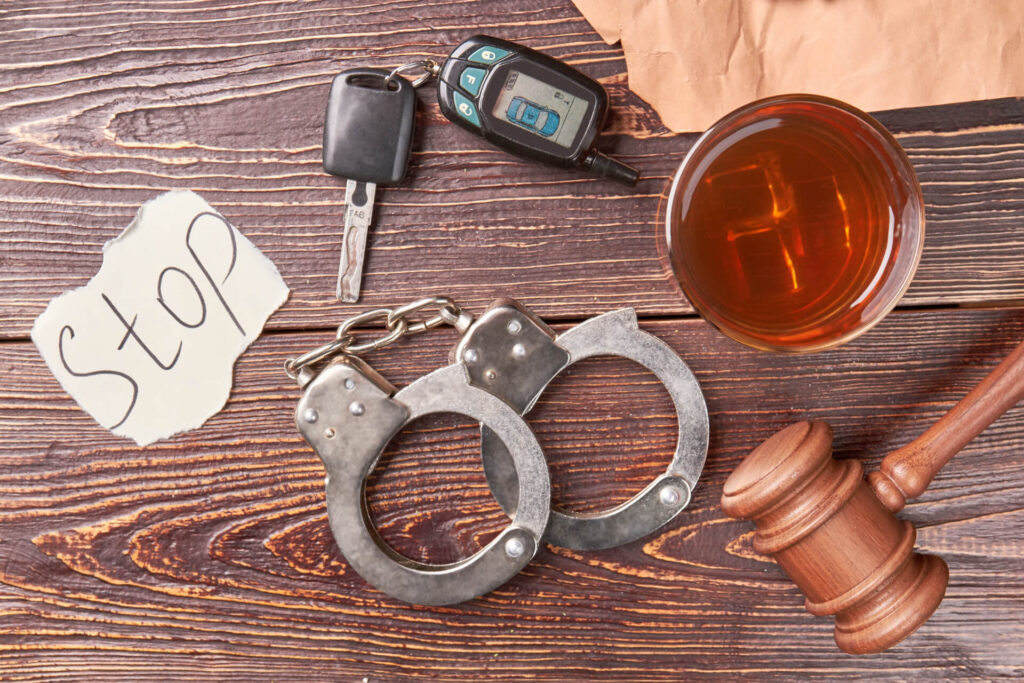
Why Choose Our Fort Worth DWI Lawyers?
When facing DWI charges in Fort Worth, choosing a lawyer with deep local knowledge and a proven track record can make all the difference.
Here's what sets us apart:
- Local Experience That Gives You an Edge: With decades of experience defending DWI cases in Fort Worth and Tarrant County, we've stood in front of tough judges, sharp prosecutors, and juries ready to decide your fate. We know how law enforcement builds its case, which arguments prosecutors rely on, and how Fort Worth courts handle DWIs. This inside knowledge lets us craft strategic, aggressive defenses—anticipating every move before it happens and fighting back where it matters most.
- Results-Driven Defense: Our top priority is getting you the best possible outcome—whether that means a case dismissal, reduced charges, or avoiding jail time. We fight aggressively to protect your future.
We proudly represent clients across Tarrant County and nearby areas, including:
- Denton County
- Parker County
- Johnson County
- Wise County
📞 DWI charges can follow you for life. Call us now for a free case evaluation and start fighting back at 9725280116
Types of DWI Offenses We Handle in Fort Worth
Our Fort Worth criminal defense lawyer covers a multitude of DWI offenses, including but not limited to:
- First-Time Offense
- Second Offense
- Subsequent Offenses (Third or More)
- Aggravated and Felony DWI
- DWI with a Minor Passenger
- Boating While Intoxicated (BWI)
- Flying While Intoxicated
- Commercial Vehicle DWI
- Intoxication Assault
- Intoxication Manslaughter
- Impaired Driving
- Drug-Related DWI
- DWI with Property Damage
- Juvenile/Underage DWI
- Related DWI Offenses
We also handle related offenses that often accompany DWI charges:
- Public Intoxication
- Minor in Possession of Alcohol
- Open Container in Vehicle
- Possession of Alcoholic Beverage in Motor Vehicle
- Possession of a Controlled Substance
- Possession of Marijuana
- Possession of Drug Paraphernalia
- Resisting Arrest
- Common Moving Violations
What is a DWI? Understanding DWI Charges in Fort Worth
In Fort Worth, a DWI (Driving While Intoxicated) occurs when a person operates a vehicle while impaired by alcohol or drugs, making them unsafe to drive.
Texas law defines legal intoxication based on Blood Alcohol Concentration (BAC) levels, which vary depending on the type of driver:
- Standard Drivers (21+): A BAC of 0.08% or higher is considered legally intoxicated, even if you feel fine to drive.
- Underage Drivers (Under 21): Texas enforces a zero-tolerance policy, meaning any detectable alcohol can lead to a DWI charge.
- Commercial Drivers: Those with a commercial driver's license (CDL) face stricter limits—a BAC of just 0.04% can result in a DWI, due to the increased risks associated with large vehicles.
Texas DWI FAQ
What is DWI?
DWI is a criminal offense that says a person may not drive a motor vehicle in a public place while “intoxicated.” The DWI statute does not say driving while drunk or “drunk driving.”
What is the legal definition of intoxication?
The legal definition of intoxication in Texas is:
- Having an alcohol concentration of 0.08 or more
- Not having the normal use of physical faculties by reason of the introduction of alcohol, a controlled substance, a drug, a dangerous drug, a combination of two or more of those substances, or any other substances into the body.
- Not having the normal use of mental faculties by reason of the introduction of alcohol, a controlled substance, a drug, a dangerous drug, a combination of two or more of those substances, or any other substances into the body
What does ‘normal’ mean?
According to the law, the definition of the word normal is the average person. The problem is how do we determine the average person? The law is vague in this subject, which lends itself for good argument to a jury that everyone is different and each has his own normal.
What is 0.08-alcohol concentration?
“Alcohol concentration” is defined by statute as: a. the number of grams of alcohol per 100 milliliters of blood; b. the number of grams of alcohol per 210 liters of breath; or c. the number of grams of alcohol per 67 milliliters of urine. A 0.02 equals one drink. A drink is 1-¼ ounces of liquor, 1 12oz beer, or 1 glass of wine. It takes one hour for the body to burn off a 0.02 down to a 0.00. Thus, to reach a 0.08 a person must consume four drinks in one hour.
Am I required to answer any questions, take Field Sobriety Tests, or take a breath test?
Under criminal law, you are not required to perform any type of test or answer any questions to the police officer. You have the right to refuse any tests and request an attorney. However, if you refuse to attempt these tests, the officer most likely is going to arrest you. Further, the civil law, which your driver’s license falls under, does not protect you. In fact, when you applied for your driver’s license you unknowingly consented to any future tests, if to which you refused you would lose your driver’s license for a period of six months. The decision is yours and there is a civil risk (your license), but you do have rights, and should not waive them. Always request your lawyer and don’t cooperate with anything if you wish to exercise your rights.
Does a person have a choice to refuse being videotaped?
No. However, although a person has no right to refuse being videotaped, he does have the right to refuse to perform any police field sobriety exercises and to refuse to answer any questions, the answers to which, might be incriminating. Unlike breath or blood test refusals, there are no penalties for refusing to perform field sobriety tests or refusing to answer questions while being videotaped.
Are Field Sobriety Tests very accurate?
If performed in a controlled environment in the exact proscribed standardized manner, the tests can be a likely indicator of intoxication. This is hardly done in the street. The research conducted by the National Highway Traffic Safety Administration, the designers of the tests, concluded the Horizontal Gaze Nystagmus is 77% accurate, the Walk & Turn is 68% accurate, and the One Leg Stand is 65% accurate only when administered in the prescribed, standardized manner. Any change from the standardized manner will compromise the tests validity and make any result inaccurate. When not conducted properly it becomes an opinion test of the officer. Therefore, these tests will inaccurately claim 23% – 35% of the people tested as intoxicated. Which when done incorrectly, which is the norm, can drop the accuracy to a frightening level.
What can affect my performance on Field Sobriety Tests?
Even SOBER persons can have difficulty with these tests, as stated by The National Highway Traffic Safety Administration. The reason is as the NHTSA has admitted, are several factors that affect every person, such as:
- Age
- Being ill
- The distraction of traffic
- The police car’s strobe lights
- Fatigued
- Footwear
- Lack of coordination
- Gusts of wind
- Weight
- Road or sidewalk conditions
- Allergies
- Scared
- Head lights of traffic
- Weather conditions
- Being nervousness
- Back problems
- Leg or knee problems
- Inner ear disorders
What is the State’s burden of proof to prove me guilty?
The State of Texas must prove your guilt “beyond a reasonable doubt”, which is the highest burden of proof in the justice system. It is not defined, by Texas law, but can be easily explained to a jury.
The lowest burden of proof is probable cause. That is how an officer can start an arrest.
The next highest burden of proof is preponderance of the evidence. This is the amount of proof needed in civil courtrooms involving civil suites. A preponderance of the evidence is proof amounting to 51% or who can move the scales of justice. The next highest burden of proof is clear and convincing evidence. This is amount of proof that will cause a juror or judge to have a “firm belief” in the matter to be proved. This is used in custody cases. Most juries when they hear that the burden of proof is higher than that to take their kids away from them understand the high level of proof. Beyond a Reasonable Doubt is the highest burden of proof. A jury must have more than that necessary to take your kids away in evidence that you were intoxicated before they could find you guilty. This is very simple, if a juror has a single doubt, based on reason, as to a person being intoxicated, they must follow the law and find them not guilty.
Do I have the right to an attorney before deciding whether to take a breath or blood test?
Texas law does not give you the right to speak with an attorney prior to making the decision of whether or not to take the field sobriety tests, the breath test or blood test. However, the law does not require you to perform any field sobriety tests or to take a blood or breath test so continue to ask for an attorney and refuse to cooperate and the likely chances of being found NOT GUILTY can increase!
How long will a DWI arrest stay on my record?
If you are convicted of the DWI, it will be on your record for life. Furthermore, a DWI conviction can be used for ten years to enhance your punishment of you are arrested for DWI again. If you are found Not Guilty, you can have the arrest and DWI charge “expunged” from your record.
Additional Resources:
Contact Our Fort Worth DWI Attorneys Today!
Listen, a DWI charge in Fort Worth isn't just an inconvenience—it's a direct threat to your reputation.
Every minute you wait, the prosecution is working against you—gathering evidence, building their case, and preparing to make you just another easy conviction.
But here's the truth: they're counting on you to do nothing.
They're hoping you'll wait too long, miss deadlines, and walk into court unprepared.
DON'T LET THEM WIN.
You've got a small window to fight back. We know the system, we know the prosecutors, and we know how to beat them at their own game.
📞 CALL RIGHT NOW: 9725280116
🖥 Or contact us online before it's too late: https://mcconathylaw.com/contact/
One call can change everything.
But wait too long… and the decision is made for you.